
Hematuria and Proteinuria in Children: A Pediatric Approach
Caroline Straatmann, MD — LSU Health Pediatric Nephrology
Hematuria and proteinuria are among the most common findings on pediatric urinalysis — and among the most clinically anxiety-provoking. Most cases are transient and benign, but persistent findings on repeat testing can signal underlying renal disease. This clinical reference, prepared by Caroline Straatmann, MD of LSU Pediatric Nephrology for the LA AAP's Red Stick Potpourri CME conference, walks Louisiana pediatricians through the differential diagnosis, initial evaluation, and criteria for nephrology referral when blood or protein appears in a child's urine.



Pediatrics from the Parishes
A Conference Reimagined
August 13 - 16, 2026
The Roosevelt Hotel • New Orleans, LA
Hematuria and Proteinuria in Children
A practical primary-care approach to evaluating blood and protein in the urine — defining what is benign versus concerning, which tests to order, and when to refer to pediatric nephrology.
1 Overview
Hematuria and proteinuria are the hallmarks of many renal diseases — yet red blood cells or protein are frequently found in the urine of otherwise healthy children and adolescents. Distinguishing benign findings from true kidney disease is the central task.
Because most isolated findings are transient and benign, the AAP removed routine urine screening from well-child visit recommendations in 2008. When an abnormality is detected, the most important first step is simply to repeat the test before pursuing an extensive workup.
2 Microscopic Hematuria
Microscopic hematuria (MHU) is usually an incidental finding of unknown duration. A urine dipstick detects heme pigment, but the presence of red blood cells must be confirmed on microscopy, since the dipstick also reacts to myoglobin and hemoglobin.
- Definition — >3–5 RBCs/HPF in centrifuged urine on at least 2–3 occasions
- Transient causes — fever, exercise, UTI, trauma, perineal irritation
- Persistent MHU — >5 RBCs/HPF for more than 4–6 weeks, evaluated independent of trauma, exercise, menstrual cycle, or sexual activity
- Demographics — girls more than boys; not age-dependent; most often transient and resolves spontaneously
Initial evaluation of isolated MHU
- UA with microscopy
- Urine calcium/creatinine ratio
- Urine protein/creatinine ratio
- Imaging is not routinely indicated (consider renal ultrasound in infants)
- Urology evaluation is not indicated; follow-up is important
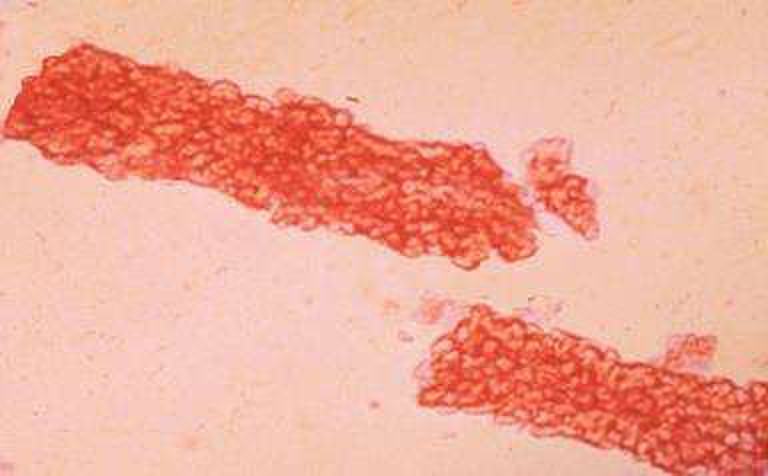
Hypercalciuria
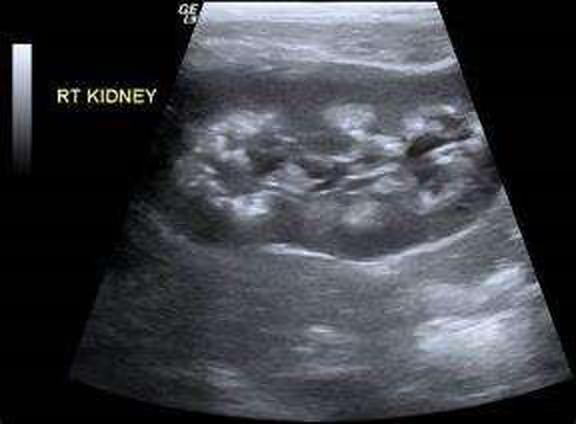
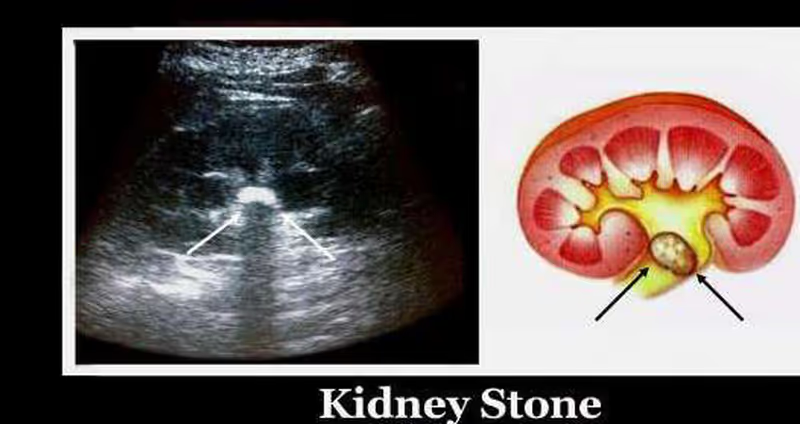
Hypercalciuria is a common, often isolated cause of hematuria, and may be associated with nephrocalcinosis or stones. Age-specific spot urine calcium/creatinine thresholds:
| Age | Urine Ca/Cr (mg/mg) |
|---|---|
| >2 years | >0.2 |
| 6–12 months | >0.6 |
| <6 months | >0.8 |
Confirm with a 24-hour urine: >4 mg/kg/day is abnormal.
3 Differential Diagnosis of Microscopic Hematuria
Persistent, asymptomatic, isolated MHU has both nonglomerular and glomerular causes. A family history is important — particularly for hereditary nephritis and thin basement membrane disease.
- Idiopathic — the most common outcome; no cause identified
- Hypercalciuria
- Thin basement membrane disease (TBMD) — benign familial hematuria
- IgA nephropathy
- Alport syndrome
- Acute or chronic glomerular disease — IgA nephropathy, post-infectious GN, HSP (IgA vasculitis)
4 Gross Hematuria
Gross hematuria is alarming to families but frequently has a benign or self-limited cause. Urine color and timing offer diagnostic clues.
| Feature | Suggests |
|---|---|
| Red urine, clots | Lower urinary tract |
| Brown / tea-colored urine | Upper urinary tract (glomerular) |
| Bleeding at voiding onset | Urethral bleeding |
| Terminal hematuria | Bladder or urethral bleeding |
| Red/pink/brown urine, negative dipstick | Foods (beets, blackberries, paprika), drugs (sulfonamides, nitrofurantoin, salicylates, phenazopyridine), urate crystals |
| Heme-positive, no RBCs on micro | Myoglobinuria (rhabdomyolysis) or hemoglobinuria (hemolysis) |
Causes of gross hematuria
- Most common — UTI (not if asymptomatic), trauma, perineal irritation
- Less common — sickle cell disease/trait, TBMD/Alport, hypercalciuria, nephrolithiasis, glomerulonephritis (PIGN, IgA nephropathy), urologic structural abnormalities (UPJO, cysts, ureterocele, bladder polyp), coagulopathies, drug-induced cystitis, Wilms tumor
Evaluation of gross hematuria
- Assess severity — BMP, urine protein/creatinine ratio
- Diagnostic workup — C3 and anti-streptococcal titers, urine Ca/Cr, urine culture, renal ultrasound
- Doppler — for renal arterial or venous thrombosis (RVT presents as gross hematuria in a nephrotic newborn or child)
- Further as indicated — ANA, C3/C4, ANCA, sickle cell screen, hearing evaluation if positive family history, VCUG/cystoscopy if lower-tract symptoms
5 Glomerular Causes of Hematuria
| Isolated renal disease | Multisystem disease |
|---|---|
| Post-infectious GN (post-streptococcal) | HSP nephritis |
| IgA nephropathy (Berger disease) | SLE nephritis |
| Alport syndrome (hereditary) | HUS |
| Thin glomerular basement membrane disease | Granulomatosis with polyangiitis |
| Membranoproliferative GN | Polyarteritis nodosa |
| Membranous nephropathy | Goodpasture syndrome |
| Focal segmental glomerulosclerosis | HIV nephropathy |
| Anti-glomerular basement membrane disease | Sickle cell glomerulopathy |
Post-infectious glomerulonephritis (PIGN)
- Classic presentation: red-brown or cola-colored urine (~70%) with nephritic syndrome — hypertension and edema from salt and water retention
- Microscopic hematuria present in ~100%
- Antecedent GAS throat infection (1–2 weeks prior) or skin infection (2–6 weeks prior)
- Laboratory hallmark: low C3, normal C4
IgA nephropathy
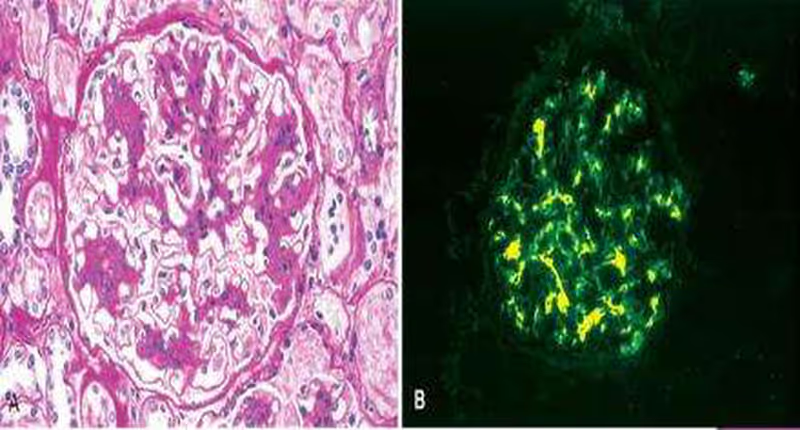
IgA nephropathy classically presents with recurrent gross hematuria (40–55%) triggered by an upper respiratory or GI infection, occurring within days of the infection — distinct from the 1–2 week lag of PIGN. Persistent microscopic hematuria between episodes is seen in 30–40%.
Thin basement membrane disease (TBMD)
- Also called benign familial hematuria or hereditary nephritis without deafness
- Autosomal dominant; persistent MHU or episodic gross hematuria
- Generally a benign course without CKD progression — but a subset develop progressive proteinuria and renal failure
Alport syndrome
- Gross and microscopic hematuria; ~80% X-linked (also AR and AD)
- Abnormal type-4 collagen in the glomerular basement membrane
- Associated eye and ear abnormalities; ESRD particularly in males; female carriers may have hematuria
6 Indications for Renal Biopsy
- Evidence of nephritis and APSGN ruled out — hypertension, edema, proteinuria, or renal insufficiency
- Positive ANA with low C3
- Gross hematuria lasting more than 2 weeks
- Frequent recurrent episodes
7 Proteinuria & Quantification
The dipstick detects albumin and is graded by concentration — which makes it sensitive to how dilute or concentrated the urine is. False positives occur with high specific gravity and alkaline (high-pH) urine.
| Dipstick | Protein | Interpretation |
|---|---|---|
| Neg / trace | <30 mg/dL | May be abnormal in dilute urine |
| 1+ | 30–100 mg/dL | May be normal in concentrated urine |
| 2+ | 100–300 mg/dL | Abnormal |
| 3+ | 300–1000 mg/dL | Abnormal |
Quantification thresholds
| Method | Normal | Abnormal / nephrotic |
|---|---|---|
| Spot urine protein/creatinine (mg/mg) | ||
| Children >2 years | <0.2 | >2–3 = nephrotic range |
| Children 6–24 months | <0.5 | >2–3 = nephrotic range |
| Timed (24-hour) collection | ||
| Adolescents & adults | Up to 200 mg/day | >1000 mg/m²/day = nephrotic |
| Children | <4 mg/m²/hr | >40 mg/m²/hr = nephrotic |
Obtain a urine creatinine to confirm adequacy of a timed collection. Because the protein/creatinine ratio normalizes for urine concentration, it gives the same value (e.g., 0.2) whether the patient is in antidiuresis or diuresis — which is exactly why it is more reliable than the dipstick.
8 Benign vs. Persistent Proteinuria
Most proteinuria detected on screening is benign — transient or orthostatic. Persistent proteinuria is the pattern that warrants concern.
- False positive — high specific gravity, alkaline urine
- Transient — fever, acute illness, exercise, stress, dehydration, cold exposure
- Orthostatic — increased excretion when upright, normal when recumbent
- Persistent — glomerular (glomerular disease) or tubular (tubulointerstitial disease/injury); benign in >90%, but silent renal disease in ~10%
Benign orthostatic proteinuria
- Increased protein excretion when upright, normal when recumbent
- On average <1 g/24h upright; most common during adolescence
- Benign — no increase in renal morbidity over 50-year follow-up
Persistent proteinuria — further evaluation
- Laboratory — CBC, CMP, C3/C4 (SLE, MPGN, APSGN), ANA, hepatitis B/C, HIV
- Consider renal biopsy — minimal change disease, FSGS, membranous nephropathy, MPGN, C3 glomerulopathy, congenital nephrotic syndrome, diabetes, SLE, CKD from nephron loss
A spot microalbumin/creatinine ratio is a highly sensitive test for small amounts of urinary albumin, useful in obesity, diabetes, sickle cell disease, and Alport syndrome.
9 Nephrotic Syndrome
Nephrotic syndrome is defined by the tetrad of:
- Nephrotic-range proteinuria
- Hypoalbuminemia (serum albumin <2.5 g/dL)
- Edema
- Hyperlipidemia
10 When to Refer & Who Needs an Annual UA
Indications for nephrology referral
- Gross hematuria without a clear cause (UTI, PIGN)
- Symptomatic microscopic hematuria
- Asymptomatic microscopic hematuria — annual follow-up to monitor for proteinuria and revisit family history
- Persistent asymptomatic hematuria with ≥1+ proteinuria
- Coexistent hypertension, edema, or acute kidney injury
Children who warrant an annual screening UA
- History of prematurity (<32 weeks), very low birth weight, significant NICU course, or umbilical arterial catheter
- Congenital heart disease
- Recurrent UTI, hematuria, or proteinuria
- Known renal disease or urologic malformation
- Solid-organ transplant, bone marrow transplant, or malignancy
- Prolonged treatment with nephrotoxic drugs, or recurrent episodes of AKI
- Family history of inherited renal disease
11 Practice Pearls
- Repeat all abnormal urine testing ×2 before an extensive workup.
- Hematuria with proteinuria is renal disease until proven otherwise and requires a renal biopsy.
- Proteinuria is more concerning for underlying kidney disease than isolated microscopic hematuria.
- Most adolescents with proteinuria on a screening UA do not have renal disease — it resolves on repeat testing.
- The urine protein/creatinine ratio is a high-value test; ideally collect a first-morning sample.
- Isolated, intermittent (orthostatic) proteinuria is not a sign of renal disease.
- Let the history and physical exam guide the evaluation, and teach families how to collect a proper first-morning urine.
This page is an educational summary for healthcare professionals and does not replace individual clinical judgment or the cited primary sources. Diagnostic thresholds and management should be applied in the context of the full clinical picture.